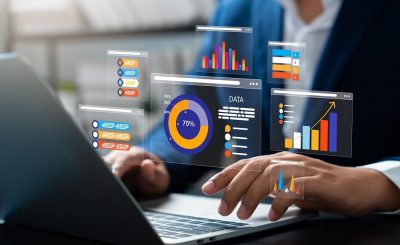
Machine learning has transformed predictive analytics from a simple statistical exercise into a powerful decision-support capability used across industries. By identifying hidden patterns in historical data, machine learning enables organizations to forecast future trends, anticipate risks, and optimize operations with greater accuracy and speed.
Predictive analytics systems powered by machine learning are now essential tools in sectors such as healthcare, finance, retail, manufacturing, transportation, and public services. These systems help organizations move from reactive decision-making toward proactive strategy development based on reliable insights.
Understanding Machine Learning in Predictive Analytics
Machine learning refers to a set of computational techniques that allow systems to learn patterns from data without explicit programming. Predictive analytics uses these learned patterns to estimate future outcomes based on historical behavior.
Together, they enable organizations to:
- Identify emerging trends early
- Reduce operational uncertainty
- Improve resource planning
- Detect anomalies and risks
- Support intelligent automation
Predictive analytics systems rely on algorithms such as regression models, decision trees, clustering methods, neural networks, and ensemble learning techniques.
Role of Machine Learning in Forecasting Accuracy
Traditional forecasting methods depend heavily on fixed assumptions. Machine learning models adapt dynamically as new data becomes available, improving prediction quality over time.
Key advantages include:
- Automatic pattern discovery
- Continuous learning from new datasets
- Improved handling of complex variables
- Reduced human bias in predictions
- Scalable forecasting across large datasets
This adaptability makes machine learning especially valuable in environments where conditions change rapidly.
Applications in Healthcare Predictive Systems
Healthcare organizations use machine learning predictive analytics to improve patient care and optimize hospital operations.
Important applications include:
- Early disease detection through medical data analysis
- Prediction of patient readmission risks
- Personalized treatment recommendations
- Forecasting disease outbreaks
- Optimization of hospital resource allocation
These capabilities help healthcare providers deliver more accurate diagnoses and timely interventions.
Applications in Financial Risk Assessment
Financial institutions rely heavily on predictive analytics systems powered by machine learning to evaluate risks and protect assets.
Major applications include:
- Credit risk evaluation
- Fraud detection in transactions
- Market trend forecasting
- Customer behavior prediction
- Portfolio risk management
Machine learning enables banks to process large transaction datasets in real time, improving both security and financial decision-making.
Applications in Retail Demand Forecasting
Retail businesses use predictive analytics to understand customer preferences and anticipate demand fluctuations.
Machine learning supports:
- Inventory optimization
- Customer purchase prediction
- Price optimization strategies
- Sales forecasting across regions
- Recommendation system development
These insights allow retailers to reduce waste, improve customer satisfaction, and increase profitability.
Applications in Manufacturing Process Optimization
Manufacturing industries benefit significantly from predictive analytics systems integrated with machine learning algorithms.
Common implementations include:
- Predictive maintenance of equipment
- Production quality monitoring
- Supply chain optimization
- Fault detection in machinery
- Production schedule forecasting
These systems reduce downtime and improve operational efficiency across production environments.
Applications in Transportation and Logistics Planning
Transportation systems generate large volumes of operational data that machine learning models can analyze for predictive insights.
Key applications include:
- Traffic flow prediction
- Route optimization planning
- Fuel consumption forecasting
- Fleet maintenance scheduling
- Delivery time estimation improvements
These capabilities improve reliability and reduce operational costs for logistics providers.
Applications in Customer Behavior Prediction
Understanding customer behavior is essential for modern organizations seeking competitive advantage.
Machine learning predictive analytics helps businesses:
- Segment customers effectively
- Predict purchase intentions
- Reduce customer churn rates
- Improve marketing campaign targeting
- Enhance user experience personalization
Organizations that apply these insights can strengthen long-term customer relationships.
Applications in Energy Consumption Forecasting
Energy providers use predictive analytics systems to manage supply and demand more efficiently.
Important uses include:
- Electricity load forecasting
- Renewable energy output prediction
- Smart grid optimization
- Consumption pattern analysis
- Energy distribution planning
These systems support sustainable resource management and reduce operational uncertainty.
Benefits of Machine Learning Based Predictive Analytics Systems
Organizations adopting machine learning predictive systems experience several measurable benefits.
Key advantages include:
- Improved forecasting reliability
- Faster decision-making processes
- Reduced operational risks
- Better customer experience management
- Increased operational efficiency
- Enhanced strategic planning capability
These benefits contribute directly to long-term organizational performance improvement.
Challenges in Implementing Predictive Analytics Systems
Despite their advantages, predictive analytics systems require careful implementation planning.
Common challenges include:
- Data quality limitations
- High infrastructure requirements
- Model interpretability concerns
- Integration complexity with legacy systems
- Skilled workforce requirements
Addressing these issues ensures successful deployment and sustainable performance.
Future Trends in Machine Learning Predictive Analytics Systems
Predictive analytics continues to evolve rapidly with advancements in artificial intelligence technologies.
Emerging developments include:
- Real time predictive analytics platforms
- Integration with edge computing systems
- Increased automation in model development
- Expansion of explainable machine learning techniques
- Greater adoption across small and medium enterprises
These innovations will further enhance the accessibility and effectiveness of predictive analytics systems.
FAQ Section
What is predictive analytics in simple terms
Predictive analytics refers to the process of using historical data and computational models to estimate future events or outcomes.
How does machine learning improve prediction accuracy
Machine learning improves prediction accuracy by identifying complex patterns in large datasets that traditional statistical techniques often overlook.
Which industries benefit most from predictive analytics systems
Industries such as healthcare finance retail manufacturing transportation and energy benefit significantly from predictive analytics applications.
Is predictive analytics useful for small businesses
Yes predictive analytics helps small businesses forecast demand understand customers and optimize operations even with limited datasets.
What types of data are used in predictive analytics systems
Predictive analytics systems typically use structured data transactional records sensor data customer interactions and historical performance datasets.
Can predictive analytics systems work without machine learning
Yes but predictions generated without machine learning are usually less adaptive and less accurate compared to modern intelligent systems.
What skills are required to work with predictive analytics systems
Professionals working with predictive analytics systems usually require knowledge of statistics programming data management and machine learning techniques.